“It’s Just Gas…” Are You Sure?
You’ve just finished dinner.
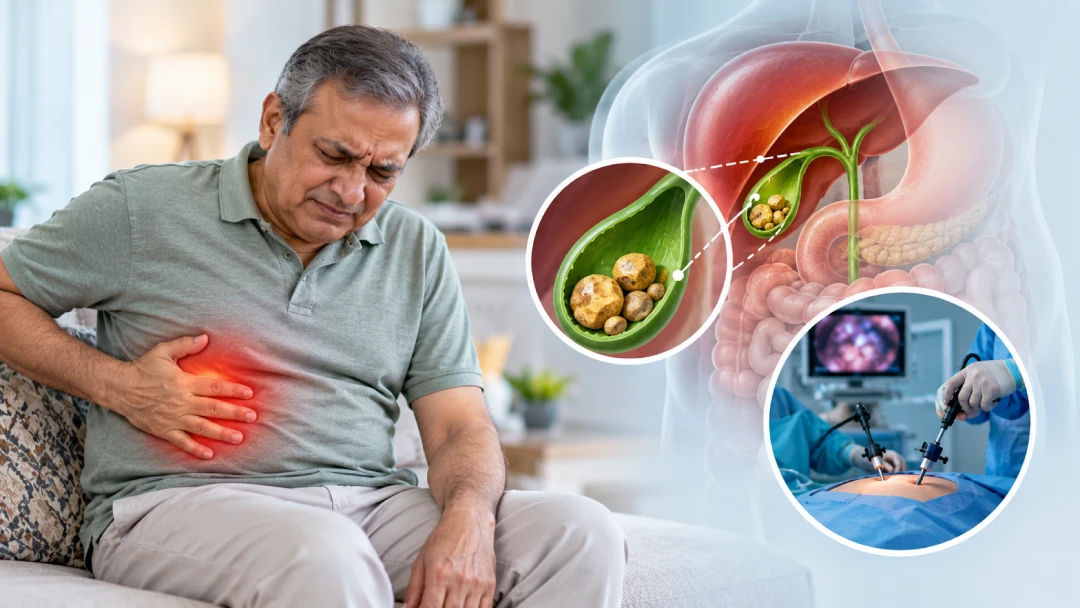
Within an hour, a sharp pain starts on the right side of your upper abdomen. It spreads towards your back or shoulder. You assume it’s acidity or indigestion, take an antacid, and wait for the pain to settle.
A few days later, the same thing happened again.
Then again.
Sound familiar?
Many people live with recurring gallbladder symptoms for months—or even years—without realizing that the real problem isn’t acidity at all. It’s the gallbladder asking for medical attention.
Gallbladder disease is becoming increasingly common in India due to changing food habits, obesity, diabetes, and sedentary lifestyles. Studies estimate that 10–20% of adults may develop gallstones during their lifetime, but surprisingly, many people don’t know they have them until symptoms begin.
The important question isn’t “Do I have gallstones?”
It’s “Are my gallstones damaging my health?”
If you’re searching for Gallbladder Surgery in Mumbai or looking for a trusted Gallbladder Surgery Hospital in Mumbai, understanding the warning signs can help you seek treatment before complications develop.
At Suvarna Hospital, Mumbai, experienced gastrointestinal and general surgeons provide comprehensive evaluation and personalised treatment for gallbladder disorders. Whether your symptoms are mild or severe, the focus is always on accurate diagnosis, evidence-based treatment, and helping patients return to a pain-free life.
What Exactly Does the Gallbladder Do?
The gallbladder is a small, pear-shaped organ located just beneath the liver. Although many people don’t think about it until something goes wrong, it plays an important role in digestion.
Its primary job is to store bile, a digestive fluid produced by the liver. After you eat—especially foods rich in fat—the gallbladder releases bile into the intestine, helping your body digest fats more efficiently.
Interestingly, the gallbladder is helpful but not essential for survival.
This is why people can continue to live healthy, normal lives even after Gallbladder Removal Surgery when medically required.
Problems begin when gallstones, inflammation, or blockage prevent the gallbladder from functioning normally.
When Is Gallbladder Pain More Than Just Indigestion?
One of the biggest reasons gallbladder disease is diagnosed late is because its symptoms often resemble common digestive problems.
Many patients initially think they have:
- Acidity
- Gas
- Indigestion
- Food intolerance
- Stomach infection
However, gallbladder pain has certain characteristic features.
You should not ignore symptoms such as:
- Pain in the upper right side of the abdomen
- Pain after eating oily or fatty meals
- Pain spreading to the back or right shoulder
- Nausea or vomiting
- Repeated episodes of abdominal pain
- Bloating after meals
- Fever associated with abdominal pain
- Yellowing of the eyes or skin (jaundice)
Recurring attacks often indicate that the gallbladder is no longer functioning normally and requires medical evaluation.
Not Every Gallstone Needs Surgery—So When Is Surgery Recommended?
One of the most common questions patients ask is:
“If I have gallstones, do I automatically need surgery?”
The answer is not always.
Some gallstones remain completely silent and never cause symptoms.
However, surgery is usually recommended when gallstones begin causing repeated pain or complications.
Doctors may advise Gallbladder Removal Surgery if you experience:
- Recurrent gallbladder attacks
- Gallbladder inflammation (cholecystitis)
- Infection
- Blockage of the bile duct
- Gallstone-related pancreatitis
- Persistent digestive symptoms due to gallstones
Instead of repeatedly treating pain with medications, removing the diseased gallbladder often provides a long-term solution for suitable patients.
Every decision is based on symptoms, investigations, and your overall health—not simply on the presence of gallstones.
Why Delaying Treatment Can Sometimes Be Risky?
Many people learn to “manage” gallbladder pain by avoiding oily food or taking painkillers whenever an attack occurs.
Unfortunately, the underlying problem usually remains.
Ignoring repeated gallbladder attacks may increase the risk of:
- Severe infection
- Gallbladder swelling
- Pus formation
- Blockage of bile flow
- Jaundice
- Pancreatitis
- Emergency surgery
Seeking treatment early often allows surgery to be planned safely rather than performed as an emergency procedure.
Early treatment usually means smoother recovery, fewer complications, and greater peace of mind.
Gallbladder Removal Surgery – What Happens During the Procedure?
One of the first questions patients ask after being advised surgery is,
“Will they remove only the stones or the entire gallbladder?”
It’s a very common question—and the answer often surprises people.
In most cases, surgeons recommend removing the entire gallbladder, not just the stones.
Why?
Because gallstones usually form due to changes in the gallbladder itself. If only the stones are removed, new stones may develop again, bringing back the same pain and increasing the risk of future complications. Removing the gallbladder eliminates the source of the problem and significantly reduces the chances of recurrence.
Today, most patients undergo Laparoscopic Gallbladder Removal Surgery (Laparoscopic Cholecystectomy), a minimally invasive procedure performed through a few small incisions instead of one large cut.
Compared with traditional open surgery, laparoscopic surgery generally offers several advantages:
- Smaller incisions
- Less post-operative discomfort
- Minimal blood loss
- Faster recovery
- Reduced hospital stay
- Smaller scars
- Quicker return to everyday activities
The exact surgical approach always depends on the patient’s condition, medical history, and the surgeon’s clinical assessment.
Can You Live Normally Without a Gallbladder?
This is perhaps the biggest concern patients have.
The answer is yes.
The liver continues to produce bile even after the gallbladder is removed. The only difference is that bile flows directly into the small intestine instead of being stored in the gallbladder.
Most patients continue to:
- Eat a normal diet after recovery
- Travel comfortably
- Exercise regularly
- Return to work
- Lead an active lifestyle
Some individuals may be advised to avoid very oily or spicy foods for a short period after surgery, but these recommendations are usually temporary and vary from person to person.
Your surgeon will provide personalized dietary advice based on your recovery.
Recovery After Gallbladder Surgery – What Should You Expect?
Recovery is often much smoother than many patients expect.
Following surgery, the healthcare team closely monitors the patient and encourages gradual movement as soon as it is medically safe. Walking early after surgery helps improve circulation, supports recovery, and lowers the risk of certain post-operative complications.
During recovery, patients are usually advised to:
- Follow prescribed medications
- Drink adequate fluids
- Eat light, easily digestible meals initially
- Avoid heavy lifting for the recommended period
- Attend follow-up appointments
- Report fever, severe pain, or unusual symptoms promptly
Every patient’s recovery journey is different. Age, overall health, existing medical conditions, and the complexity of the surgery all influence recovery time.
The medical team provides individual guidance to ensure a safe and comfortable return to normal life.
Why Choose Suvarna Hospital for Gallbladder Surgery in Mumbai?
Choosing the right hospital is about more than undergoing surgery—it is about feeling confident throughout the entire treatment journey.
At Suvarna Hospital, Mumbai, patients receive comprehensive care beginning with accurate diagnosis and continuing through surgery, recovery, and follow-up.
The hospital focuses on providing safe, ethical, and patient-centred surgical care supported by experienced healthcare professionals and modern infrastructure.
Why do patients trust Suvarna Hospital?
- More than 25 years of trusted healthcare service
- Experienced general and gastrointestinal surgeons
- Advanced laparoscopic surgical facilities
- Modern operation theatres
- Comprehensive diagnostic support
- Experienced anaesthesia and nursing teams
- Patient-focused treatment approach
- Ethical medical practices
- Affordable and compassionate healthcare
- Multispecialty support under one roof
Every patient receives a treatment plan tailored to their condition, ensuring informed decisions and personalised care.
Frequently Asked Questions
1. Will all gallstones eventually require surgery?
No. Gallstones that do not cause symptoms may only require observation. Surgery is generally recommended when gallstones cause pain, inflammation, infection, or other complications.
2. Is laparoscopic gallbladder surgery safe?
Laparoscopic gallbladder removal is a commonly performed procedure worldwide. Your surgeon will evaluate your overall health and discuss the most appropriate treatment approach for your condition.
3. Can gallstones dissolve with medicines?
Certain medicines may help in selected situations, but they are not suitable for every patient and do not always provide a permanent solution. Your doctor will recommend the best treatment based on your symptoms and investigation findings.
4. What foods should I avoid if I have gallstones?
Many people experience worsening symptoms after consuming oily, fried, or high-fat meals. Until you are evaluated, eating a balanced, lower-fat diet may help reduce discomfort, but dietary changes alone do not remove gallstones.
5. How are gallstones diagnosed?
Doctors usually diagnose gallstones through a clinical examination supported by investigations such as an abdominal ultrasound and, when necessary, additional imaging or blood tests.
6. When should I seek emergency medical attention for gallbladder pain?
Severe abdominal pain lasting several hours, persistent vomiting, fever, chills, or yellowing of the skin or eyes should never be ignored and requires immediate medical evaluation.