“If someone near you is having a heart attack… would you know what to do in the next 10 minutes?”
It’s a question most people never think about—until they’re suddenly forced to answer it.
A father clutches his chest while watching television.
A colleague suddenly complains of severe chest pain during a meeting.
In moments like these, people often panic. Some wait for the pain to settle. Others assume it’s acidity, indigestion, or muscle strain. A few even decide to “sleep it off” and visit a doctor the next morning.
Unfortunately, a heart attack doesn’t wait.
Every minute that passes without treatment can increase damage to the heart muscle. What happens during the first hour after symptoms begin often determines not only survival but also how well the heart functions for years to come.
According to the Indian Council of Medical Research (ICMR), cardiovascular diseases account for nearly 28% of all deaths in India, while heart attacks are occurring at increasingly younger ages due to diabetes, hypertension, smoking, obesity, high cholesterol, chronic stress, and sedentary lifestyles. Studies also suggest that many patients delay reaching the hospital because they mistake the symptoms for simple gastric discomfort or fatigue.
Rapid emergency medical care has improved survival rates. When patients receive timely diagnosis and treatment, doctors can restore blood flow, reduce heart muscle damage, prevent life-threatening complications, and improve long-term recovery.
If you’re searching for Heart Attack Emergency Care or a trusted 24/7 Emergency Hospital in Mumbai, knowing when to act can make all the difference.
At Suvarna Hospital, Mumbai, emergency medical teams are trained to respond quickly to cardiac emergencies, ensuring that patients receive prompt evaluation, immediate stabilisation, and appropriate treatment without unnecessary delays.
Why Every Minute Matters During a Heart Attack
Imagine your heart as a busy city.
The coronary arteries are the highways that deliver oxygen-rich blood to every part of the heart muscle. When one of these arteries becomes suddenly blocked, the heart begins to lose its blood supply.
Unlike many other organs, the heart cannot simply “wait” until morning.
Without oxygen, heart muscle cells begin to suffer damage. As time passes, more muscle is affected, making the heart weaker and increasing the risk of serious complications.
This is why cardiologists often say:
“Time is Muscle.”
The faster blood flow is restored, the greater the chance of protecting the heart and reducing permanent damage.
Prompt emergency care can help:
- Preserve healthy heart muscle
- Reduce complications
- Improve treatment outcomes
- Lower the risk of heart failure
- Increase the chances of survival
Delaying medical attention even by an hour can significantly affect recovery.
Heart Attack Symptoms
Movies often show heart attacks as sudden collapse with severe chest pain.
Real life is often very different.
Some patients experience intense chest pressure, while others notice symptoms that appear mild or unrelated to the heart.
Common warning signs include:
- Chest pain, heaviness, or tightness
- Pain spreading to the left arm, shoulder, neck, jaw, or back
- Sudden shortness of breath
- Cold sweating
- Nausea or vomiting
- Unexplained fatigue
- Dizziness or fainting
- Feeling of impending doom
- Pain lasting more than a few minutes or returning repeatedly
Women, elderly individuals, and people with diabetes may experience less typical symptoms such as unusual tiredness, breathlessness, nausea, or discomfort rather than severe chest pain.
This is why any unexplained chest discomfort should be treated seriously until proven otherwise.
What Should You Do If You Suspect a Heart Attack?
When someone develops symptoms suggestive of a heart attack, staying calm and acting quickly are equally important.
Here are the immediate steps to remember:
Call for Emergency Medical Help Immediately
Do not wait to see whether the pain improves on its own.
Avoid Driving Yourself If Possible
Travelling in an ambulance allows trained professionals to begin emergency care while transporting the patient safely to the hospital.
Keep the Patient Calm
Help the person sit comfortably and avoid unnecessary physical activity until medical assistance arrives.
Share Medical Information
If available, inform the emergency team about existing conditions such as diabetes, hypertension, previous heart disease, allergies, or current medications.
Never Ignore Persistent Chest Pain
Even if symptoms seem to improve temporarily, medical evaluation remains essential.
Early action saves valuable heart muscle—and in many cases, saves lives.
What Happens When You Reach the Emergency Department?
Many patients worry that valuable time will be lost after arriving at the hospital.
Modern emergency cardiac care follows a structured approach designed to minimise delays.
Patients with suspected heart attacks are rapidly assessed through clinical examination and investigations such as:
- ECG
- Blood pressure monitoring
- Oxygen level assessment
- Blood investigations
- Continuous cardiac monitoring
Based on these findings, the emergency and cardiology teams decide the most appropriate treatment plan without unnecessary delay.
The goal is simple:
Diagnose quickly. Treat immediately. Protect the heart.
How Emergency Treatment Helps Save the Heart
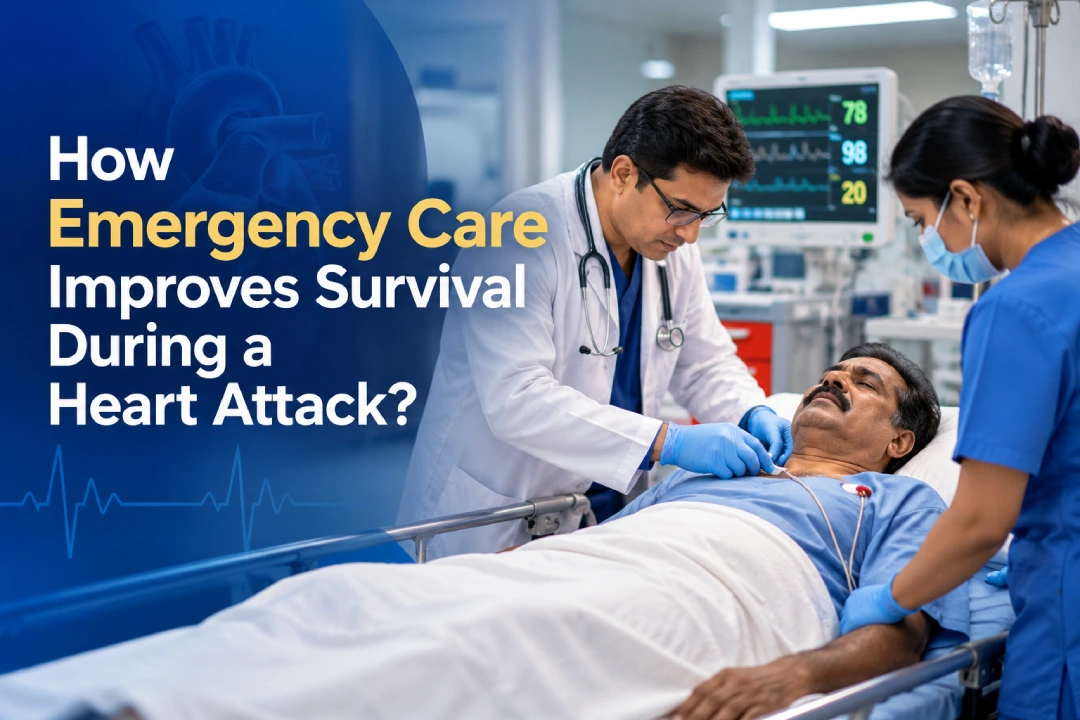
When a patient reaches the hospital with a suspected heart attack, every second counts. The emergency team follows well-established protocols to diagnose the condition quickly and begin appropriate treatment as early as possible.
The primary objective is not only to save the patient’s life but also to restore blood flow to the heart muscle, minimise permanent damage, and reduce the risk of future complications.
Depending on the patient’s condition, treatment may include:
Immediate Stabilisation
The emergency team continuously monitors the patient’s heart rate, blood pressure, oxygen levels, and overall condition while providing supportive care.
Medications
Appropriate emergency medications may be administered to reduce clot formation, improve blood flow, relieve symptoms, and support heart function based on the patient’s clinical condition.
Advanced Cardiac Evaluation
Specialists evaluate ECG findings, blood investigations, medical history, and symptoms to determine the most suitable treatment strategy.
Emergency Cardiac Procedures
Some patients may require urgent procedures such as coronary angiography or angioplasty to reopen blocked arteries and restore blood supply to the heart.
The exact treatment plan depends on the type of heart attack, the severity of the blockage, the patient’s overall health, and how quickly medical care was received.
The Biggest Mistakes People Make During a Heart Attack
Many heart attack deaths occur not because treatment is unavailable, but because treatment is delayed.
Some of the most common mistakes include:
- Assuming the pain is caused by acidity or indigestion
- Waiting several hours to “see if it improves”
- Taking painkillers without consulting a doctor
- Driving long distances instead of calling emergency medical services
- Ignoring symptoms because they are mild
- Continuing to work despite chest discomfort
- Delaying hospital evaluation due to fear of admission
Every minute of delay allows more heart muscle to remain without oxygen.
Why Choose Suvarna Hospital for Heart Attack Emergency Care in Mumbai?
Cardiac emergencies require speed, coordination, and experienced medical professionals working together without delay.
At Suvarna Hospital, Mumbai, emergency care is designed to ensure that patients with suspected heart attacks receive immediate attention from the moment they enter the hospital.
The hospital combines experienced emergency physicians, cardiologists, trained nursing staff, advanced diagnostic facilities, and modern infrastructure to deliver timely and evidence-based cardiac care.
Why do patients trust Suvarna Hospital?
- 24/7 Emergency Department
- Rapid emergency cardiac assessment
- Experienced emergency physicians
- Dedicated cardiology support
- Advanced ECG and diagnostic facilities
- Modern intensive care services
- Experienced nursing and critical care teams
- Multispecialty hospital support
- Patient-centred emergency care
- More than 25 years of trusted healthcare service
Every emergency follows structured treatment protocols to ensure patients receive prompt evaluation and appropriate medical care without unnecessary delays.
One decision can change everything.
Frequently Asked Questions
1. How do I know if chest pain is a heart attack or just acidity?
Chest pain caused by a heart attack may feel like pressure, heaviness, tightness, or squeezing and can spread to the arm, jaw, shoulder, or back. Because the symptoms can overlap with acidity, any persistent or unexplained chest pain should be evaluated immediately by a doctor.
2. Can young adults also have heart attacks?
Yes. Heart attacks are increasingly being reported among younger adults due to risk factors such as smoking, diabetes, obesity, high cholesterol, hypertension, chronic stress, and unhealthy lifestyles.
3. What is the ‘Golden Hour’ in a heart attack?
The Golden Hour refers to the first hour after heart attack symptoms begin. Receiving emergency medical treatment during this period can significantly reduce heart muscle damage and improve survival.
4. Should I drive myself to the hospital during a heart attack?
If possible, no. Calling emergency medical services is generally safer because trained professionals can begin monitoring and provide initial care during transport.
5. Can heart attack symptoms come and go?
Yes. Some patients experience intermittent chest discomfort or symptoms that improve temporarily before becoming severe. These symptoms should never be ignored.
6. Why choose Suvarna Hospital as a 24/7 Emergency Hospital in Mumbai?
Suvarna Hospital, Mumbai provides round-the-clock emergency services, experienced emergency physicians, advanced cardiac evaluation, critical care support, and coordinated treatment for patients with suspected heart attacks and other medical emergencies.